What We Did
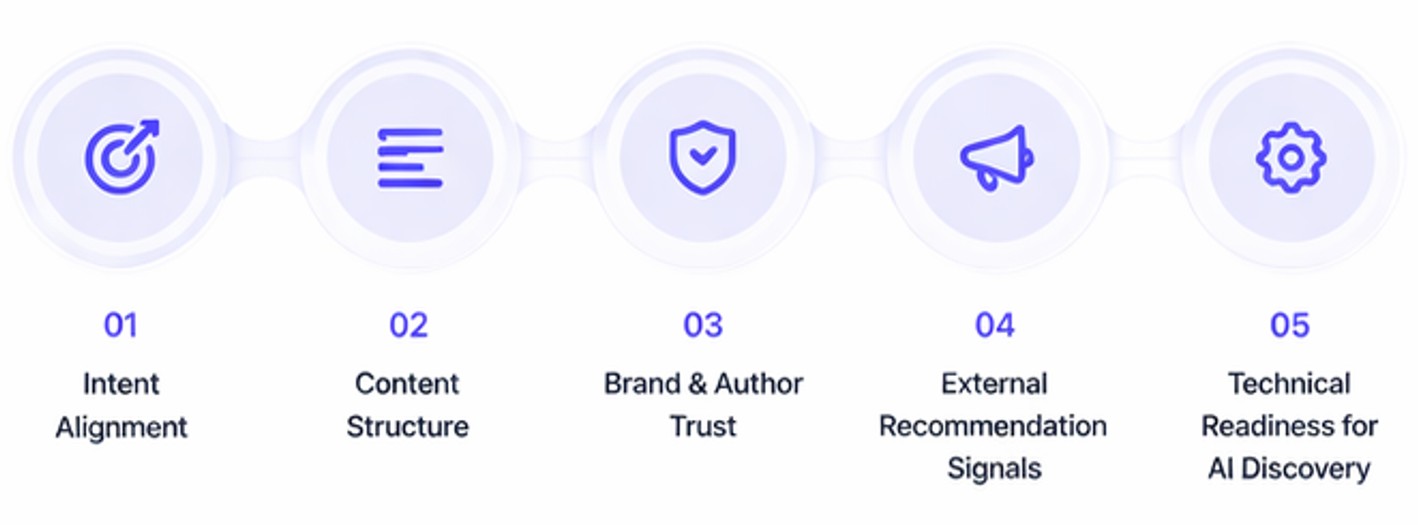
We then translated this strategy into a set of focused improvements across content, structure, trust signals, and technical readiness.
1. Rebuilt content around intent, not just keywords
One of the first priorities was improving intent alignment across the site.
We reviewed how pages addressed user needs and reworked content so that each page had a clearer role. Informational pages were strengthened to answer informational queries directly and cleanly, while commercial pages were shaped more clearly around commercial intent.
This mattered because AI systems respond better to pages that are tightly aligned with one purpose. When a page tries to do everything at once, it becomes harder for AI to understand what the page should be cited for.
We also restructured content so that key answers were easier to extract. Instead of hiding important points inside long, diluted copy, we made answers more direct, more compact, and easier to interpret. Definitions, comparisons, summaries, lists, and structured blocks were used intentionally to improve clarity.
Where relevant, we expanded pages so they covered the main topic more fully, including adjacent questions and supporting context. The goal was not simply to add more text, but to make pages more complete and more useful as source material for AI-generated responses.
2. Improved content structure for citation-readiness
A major part of the work focused on how information was presented.
AI systems tend to favor pages that are easy to parse and summarize. Because of that, we improved page structure across key content assets by introducing cleaner hierarchies, more consistent subheadings, better content segmentation, clearer summaries, comparison-style sections, tables, and list-based formatting where appropriate.
We also strengthened article formatting so that important answers appeared in the right place and in the right shape. This made content easier for AI systems to interpret and increased the chance that relevant parts of the page could be surfaced in AI-generated answers.
For topics where ranking or comparison content was relevant, we also improved list-style and category-style content so that the site could participate more effectively in recommendation and “best options” type prompts.
3. Strengthened brand trust and entity clarity
AI visibility is not only about page relevance. It is also about whether the system trusts the source behind the page.
For that reason, we worked on reinforcing the site’s trust signals at the brand and entity level. We improved how the company presented itself, clarified key facts about the business, and made brand information more consistent and easier to verify across the site and external sources.
Where appropriate, we also supported author and publisher credibility signals. This included clearer attribution, stronger expert positioning, and content presentation that made expertise more explicit.
The broader goal was to help AI systems connect the content not just with a URL, but with a credible business and a trustworthy source behind it.
4. Expanded external trust signals and third-party validation
Another key part of the campaign was building stronger off-site corroboration.
AI systems often rely on more than the website itself. They also look at how a brand is represented across third-party platforms, reviews, directories, media mentions, maps, community discussions, and ranking-style resources.
To support this, we worked on expanding the site’s external trust footprint. That included improving the consistency of brand mentions, increasing visibility across relevant platforms, strengthening review signals, and improving the quality and diversity of third-party references associated with the business.
For local and commercially sensitive queries, this type of validation is especially important. A business may have strong on-site content, but still remain underrepresented in AI recommendations if its reputation and supporting signals are weak across the wider web.
5. Improved technical readiness for AI discovery
We also treated technical SEO as part of AI visibility, not as a separate checklist.
If a page is slow, poorly structured, difficult to crawl, or difficult to interpret, it becomes a weaker source for AI systems. To improve that foundation, we worked on core technical elements related to accessibility, indexing, clarity of structure, and machine-readability.
This included strengthening crawlability, improving how key content was exposed, and supporting important sections with better structural consistency. We also implemented or improved structured elements where relevant, helping the site become easier to process and reuse in AI-driven environments.
The result was a cleaner technical layer that supported both traditional search and AI citation potential.
6. Built an ongoing monitoring and iteration process
AI visibility is still far less transparent than traditional rankings, so monitoring was a critical part of the project.
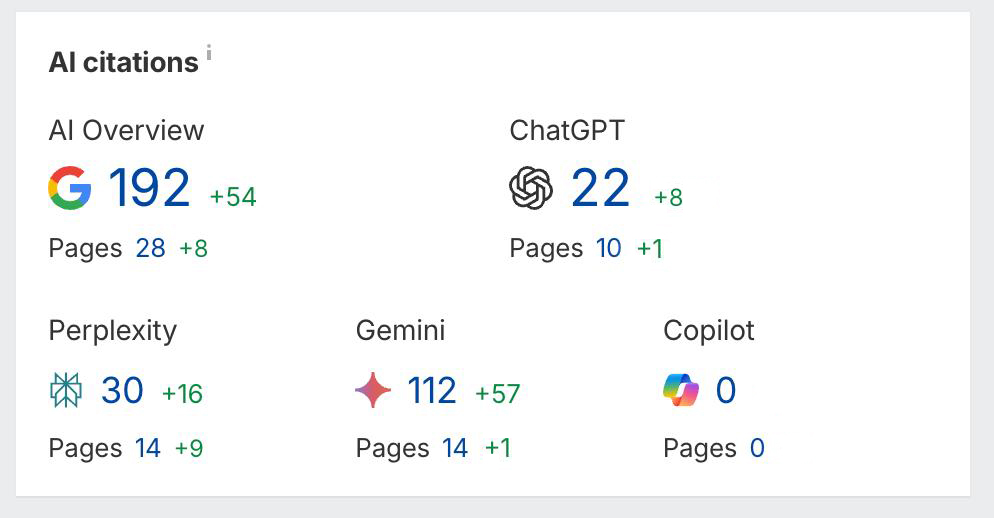
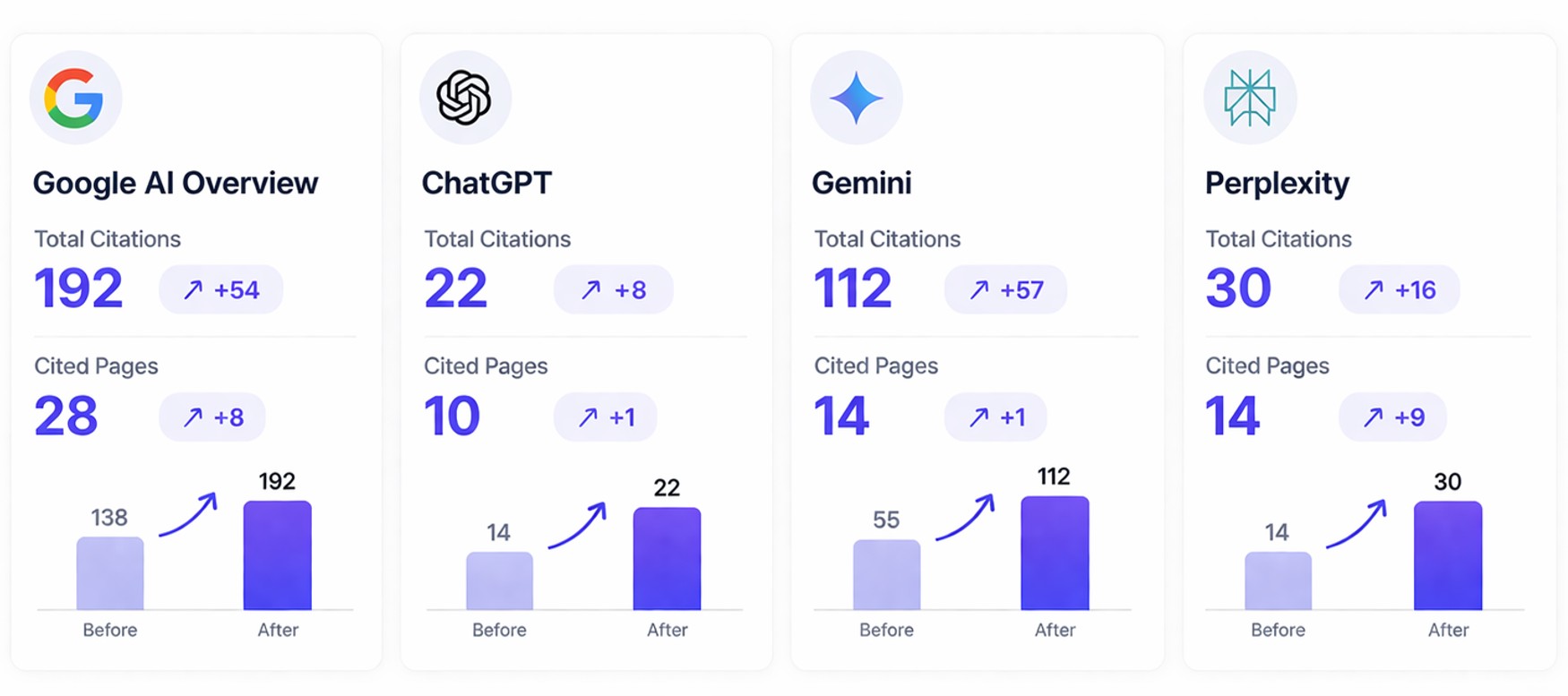
We did not treat this as a one-time implementation. Instead, we tracked where the brand and its pages were being cited, which sources were being picked up, which page types performed better, and where additional improvements were needed.
This gave us a working feedback loop. Rather than guessing what AI systems might prefer, we could refine the strategy based on actual citation behavior and visibility trends across different platforms.