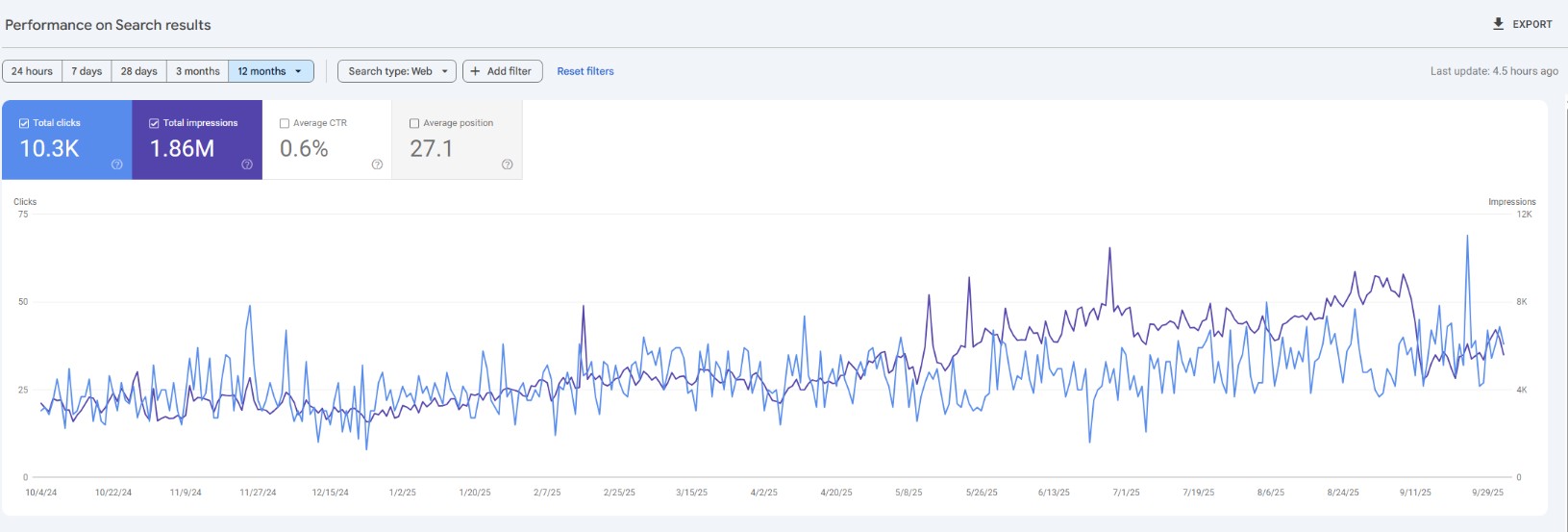
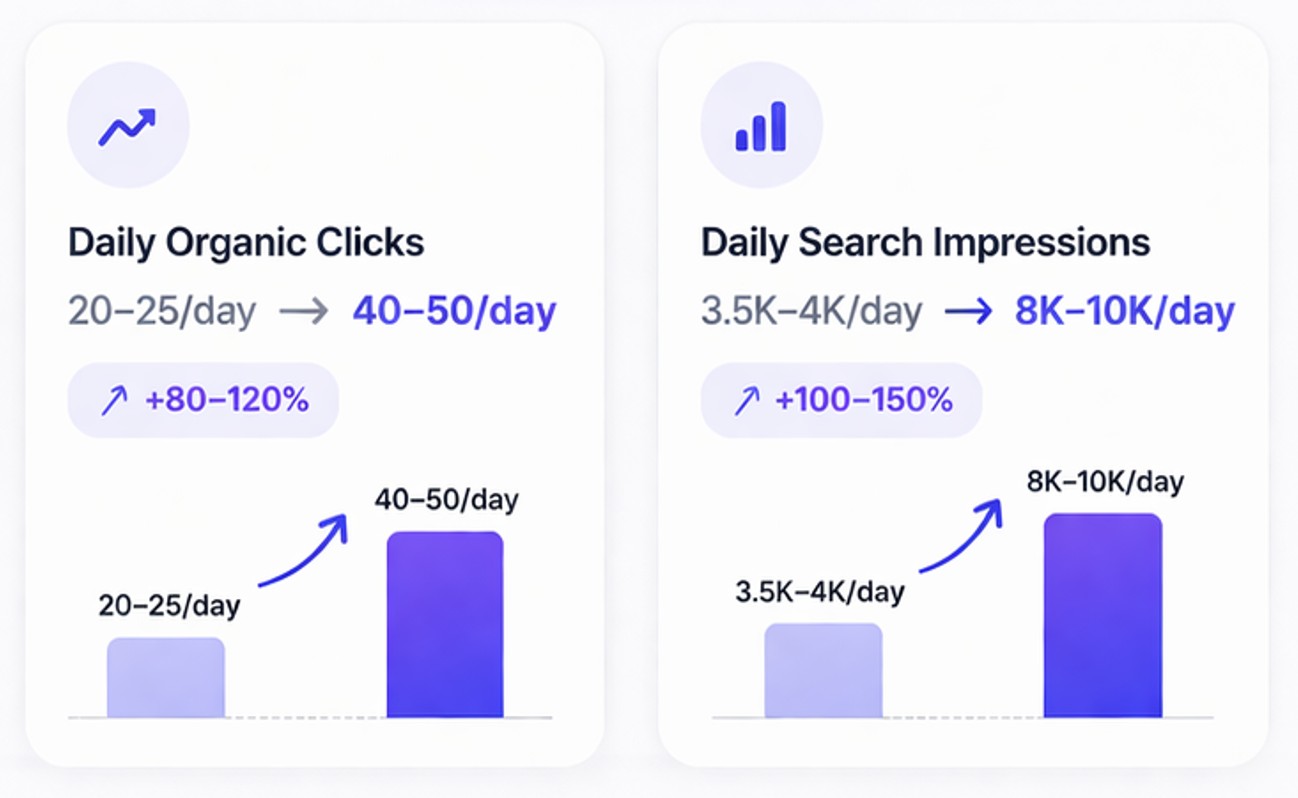
What We Did
Based on the audit findings, we focused on the fixes most likely to improve rankings, relevance, and lead quality.
1. Full SEO audit and competitor analysis
We started with a comprehensive SEO audit of the website and a review of competitors in the niche. This helped us identify where the client was losing commercial relevance, where competitors were stronger, and which areas could create the fastest SEO gains.
2. Search intent cleanup and cannibalization reduction
One of the key priorities was fixing the overlap between blog content and commercial pages.
We reviewed how pages were aligned with search intent and separated them more clearly into two groups:
- informational pages for informational intent,
- commercial/product pages for purchase-oriented intent.
This helped reduce internal competition between blog articles and product pages, improve topical relevance, and strengthen product pages’ ability to rank for queries more likely to convert.
3. URL structure improvement
We found that the website used a mixed URL structure, where parts of the site followed a flatter structure while others followed a more hierarchical model.
To improve clarity and consistency, we reworked the URL architecture into a more structured format that better matched a product-driven website. This made the site easier to understand from both a search-engine and information-architecture standpoint.
4. Content quality improvements
During the audit, we found multiple pages with grammar, spelling, and wording issues. These may seem minor at first, but across commercial pages, they can weaken trust, reduce content quality, and hurt conversion potential.
We reviewed and corrected those issues across the site, improving overall content quality and page presentation.
5. Metadata optimization and semantic expansion
We also reviewed the site’s metadata and keyword targeting.
After expanding the semantic coverage and refining keyword mapping, we optimized title tags and meta descriptions across key pages. This helped improve keyword relevance, strengthen page targeting, and support broader organic visibility.
6. Link building and authority support
Off-page SEO was also part of the strategy.
We worked on a cost-effective but diversified link acquisition approach that included relevant local links, outreach-based article placements, and supporting crowd-type links such as forums and directories. The goal was to improve authority signals while keeping the backlink profile more natural and balanced.
7. Commercial factor optimization
Since the client’s goal was growth in inquiries, we also reviewed the website from a commercial trust perspective.
We checked the consistency of business information across the website, Google Business Profile, and social channels. This included brand naming consistency, contact details, and trust-related elements that support both local SEO and user confidence.
8. UX and conversion path improvements
Some outdated pages were redesigned and improved visually. We also added stronger CTAs within informational content, creating clearer paths from blog articles to product pages.
This helped bridge the gap between informational traffic and commercial action, giving users a more natural way to continue their journey toward inquiry or purchase.